I Drink Your Milkshake
For three years the labs were selling picks and shovels. This morning Anthropic started selling the miners engineers trained on the model, embedded inside your operations, paid for by Wall Street. The labs did not just walk into the consulting industry today. They walked into the part of your own company where the analysts you laid off used to sit. Phase one was you firing them. Phase two is them coming back through the front door, on Anthropic's payroll instead of yours.

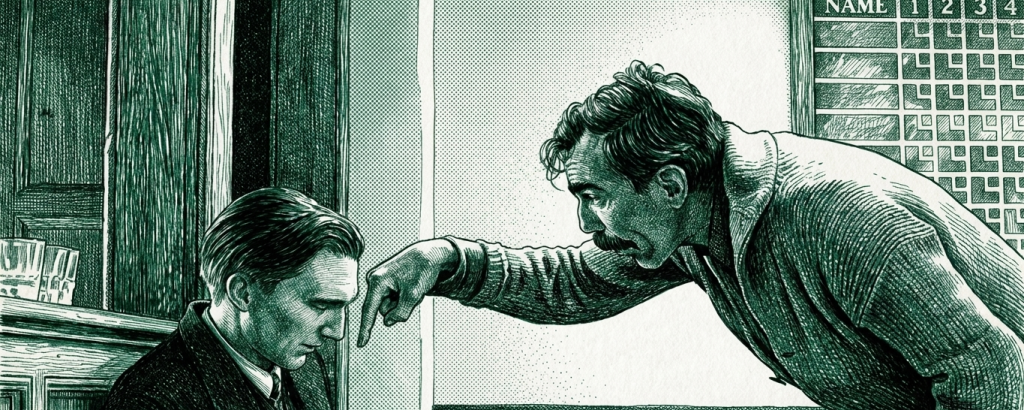
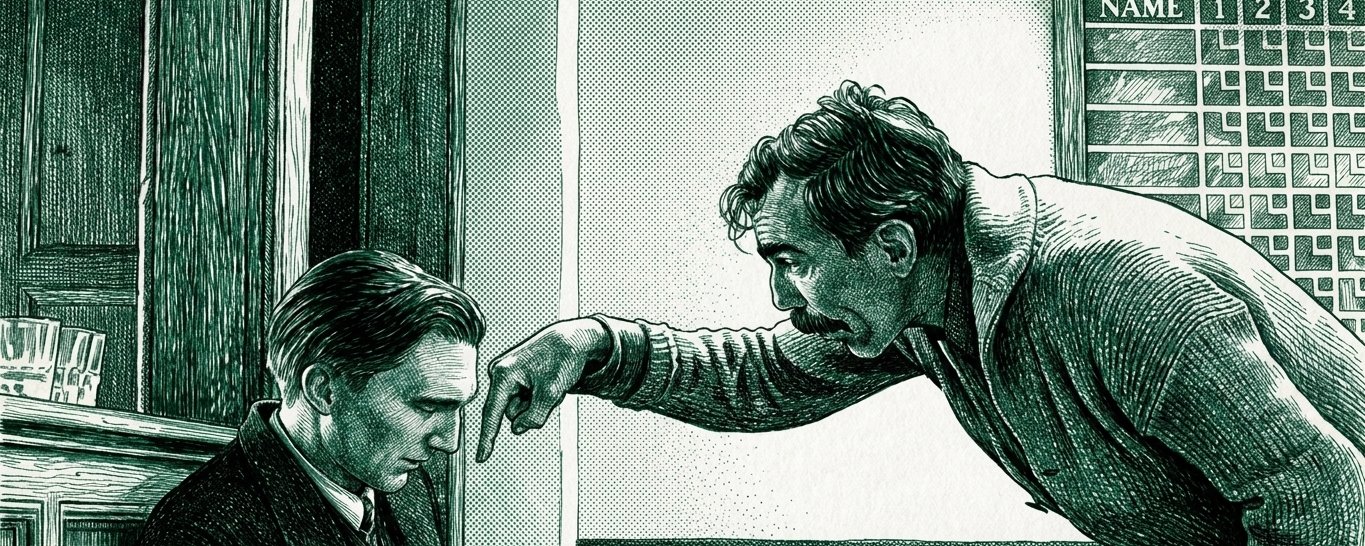
THE NUMBER: $1.5 billion — what Anthropic, Blackstone, Goldman Sachs, and Hellman & Friedman committed Monday morning to a new joint venture that will embed Anthropic engineers directly inside the operations of mid-sized companies, starting with the hundreds of portfolio firms the founders already own. Apollo Global, General Atlantic, Sequoia, Leonard Green, and Singapore’s GIC piled in alongside. The structure mirrors Palantir’s forward-deployment model. The targeting list reads like a Big 3 deck. The pitch is a clean shot at McKinsey, Bain, BCG, and Accenture — combined with Anthropic ownership of the model running underneath. OpenAI is reportedly chasing a near-identical structure with TPG and Bain. “I drink your milkshake,” Daniel Plainview tells Eli Sunday at the end of There Will Be Blood, demonstrating with a straw how the oil under a neighbor’s land had flowed sideways into his own well. The labs are not drilling on McKinsey’s land. They are not even drilling on yours. They are the deeper straw, and the implementation revenue — the money that used to pay your own analysts and your own consultants — is now flowing across the property line into a well that Anthropic owns and Goldman financed. The labs put the straw in this morning.
The Wall Street Journal had it first. Fortune ran the story by 10:37 AM ET. CNBC followed at 12:43. Reuters caught up by mid-afternoon. The structure is the news. Anthropic is not licensing Claude into a consulting firm. Anthropic is launching one — capitalized at $1.5 billion, co-founded with Blackstone, Goldman, and Hellman & Friedman — and staffing it with its own engineers, embedded as forward-deployed implementation teams inside the founders’ portfolio companies first and the broader mid-market thereafter. Goldman’s Marc Nachmann told CNBC, “There’s a big shortage of people who know how to apply these tools into businesses and then transform them.” Blackstone’s Jon Gray called the talent gap “one of the most significant bottlenecks to enterprise AI adoption.” Anthropic’s CFO Krishna Rao closed the press loop: “Enterprise demand for Claude is significantly outpacing any single delivery model.”
That last sentence is the corporate development thesis dressed up as an operations comment. Translated: we cannot sell enough of this through any one channel, so we are launching a new channel that we own. Translated again: the implementation work that used to live inside your company — and then briefly inside McKinsey — is going to live inside an Anthropic subsidiary that Goldman wrote the check for, and the teams doing the work are going to be Anthropic employees on Anthropic’s payroll.
OpenAI’s reported TPG and Bain version is the second-loudest signal of the day, and most of the press coverage missed it. The frontier labs do not have a single example in their fifteen-year history of not copying each other product-for-product, feature-for-feature, deal-for-deal. They will not stop copying each other now that the copy target has expanded from chatbots to operating subsidiaries. By the end of Q3 every frontier lab will have a flagship implementation business and a Wall Street balance sheet sitting behind it. When the duopoly runs the same play on the same Monday, the cycle has already decided. The only thing left to argue is the order in which Microsoft, Google, and xAI announce theirs.
⛏️ Phase One Was You Firing Them. Phase Two Is Them Coming Back On Anthropic’s Payroll.
For eighteen months the labs and their press apparatus told the operating world the same story. AI is going to replace your knowledge workers. Klarna ran the math at the equivalent of 700 customer-service employees displaced. Block cut 4,000 roles citing “intelligence tools.” Atlassian, Duolingo, Oracle, Salesforce, Meta — every company on the list ran some version of the same arithmetic. The CFO had a number on a slide. The CEO had a productivity story to tell investors. The HR department had a severance package and a press release. The math always looked good on the spreadsheet. The math always looks good on the spreadsheet.
Then the next quarter showed up. The work the analysts used to do still had to get done. The reports still had to be written. The forecasts still had to be modeled. The reconciliations still had to be reconciled. The brave new AI-native operating model turned out to require a layer of people who knew how to actually drive the AI through the workflow — and that layer had just been laid off, fired, severance-papered, escorted out of the building, and offered the same role at half the comp at three other companies in the same downturn. The Sam Altman version of this is the line he gave Fortune over the weekend: “AI washing.” Many of the layoffs blamed on AI had nothing to do with AI. Most of the layoffs blamed on AI did not actually result in the work going away. The work just lost its labor force.
Today is the first day the labs offered to send the labor force back. Six forward-deployed Anthropic engineers, embedded for a year, with the model running underneath them, paid for by your PE sponsor, working on your operating P&L. That is the structure of the JV. That is the pitch. The phrase forward-deployed is the same phrase Palantir used for fifteen years to describe the engineers it embedded inside its government and enterprise customers. The phrase is doing exactly the same work today. The implementation team is the labor force. The labor force has been rebranded as a vendor relationship. The vendor reports to Anthropic. Anthropic reports to its cap table. You report to Goldman.
Read it slowly. The first phase displaced the analyst on your payroll. The second phase brings the analyst back on Anthropic’s payroll. The agent in the seat is loyal to the lab. The engineer next to the agent is loyal to the lab. The model running the agent is loyal to the lab. The contract paying for all three is loyal to the PE sponsor. Whatever your AI deployment used to be inside your own company is now an outsourced relationship with three counterparties stacked on top of you. That is not the consulting business getting disrupted. That is the consulting business getting reabsorbed into the lab — with the lab keeping the implementation margin that consulting used to keep, and the operating company holding the same workflow risk it used to hold, minus the institutional knowledge that walked out the front door eighteen months ago.
If that sounds bleak, it is. It is also the actual transaction. Pretending otherwise is the noise the rest of the press cycle is going to produce all week.
💵 Why The Math Is About To Move Anyway
The structural fact under the JV is the part that matters to the operator reading this on Tuesday morning. For every dollar enterprises spend on software, they spend six on services. That is the prize the frontier labs are now fighting for. Sequoia partner Julien Bek wrote the public version of this thesis in April: the next great company will not sell software at all; it will sell outcomes — legal services, financial analysis, insurance underwriting, compliance work — delivered by AI and billed like consulting. Anthropic’s Monday joint venture is that thesis capitalized, staffed, and pointed at a wallet that has run on retainer arithmetic for forty years.
The wallet is going to move. The math is too good to argue with.
The very hard truth for consulting that nobody is saying out loud yet is this: when you bought a consulting engagement, you were always paying for the intelligence of one or two senior partners — and the labor force they commanded. The senior partner brought the judgment, the relationships, and the institutional pattern recognition. The labor force — the engagement managers, the senior associates, the analysts — was the bandwidth that let the senior partner’s judgment land inside an actual operating company over six months instead of being a single PowerPoint slide that you read on the plane home. The bandwidth was the arbitrage. The bandwidth was always the cost line. The bandwidth was always going to be the part automation came for.
The model that walks in this morning is smarter than almost everyone on earth on the cognitive tasks that used to fill the analyst’s day. The implementation team that walks in alongside it is the new bandwidth. That is the substitution. The senior partner is fine. The senior partner at Kirkland & Ellis still gets the call over Harvey, the senior partner at McKinsey still gets the call over Anthropic’s new venture, the senior portfolio manager at Bridgewater still gets the call over an AI fundamental analyst. Years of judgment and decades of relationships do not get replaced by a forward-deployed engineer with a pre-trained model. They never will. The senior partner survives. Every other rank in the firm is now competing with the model and a team that knows how to drive it.
This is the same pattern that has played out in every knowledge-work business since the first one. The senior partners survive. The middle ranks compress. The juniors are replaced or radically repurposed. The new ratio is six forward-deployed engineers running the model for the price of two senior associates. That is what the mid-market just got handed. Compared to a McKinsey Senior Engagement Manager at $250,000 per engagement-month — which a $400 million distributor or a 1,500-person regional bank could never afford — six lab-embedded engineers for a year is a procurement decision the mid-market can actually make. The mid-market has been waiting twenty years for this number. Today it arrived.
🚧 Why The Non-PE Mid-Market Is About To Find Out It’s On The B-Tier
The bleaker fact, which no other newsletter is going to write up this week, is that the mid-market is not one market. It is three.
The Fortune 500 will be fine. McKinsey, Bain, BCG, and Accenture will scramble through this summer to launch their own lab-aligned implementation businesses — Bain has the closest existing partnership with OpenAI, Accenture has the largest existing Microsoft Copilot deployment of any enterprise on earth (740,000 paid seats, internal). The Big 3 brand and bench, plus a lab partnership announced by Q3, plus the ability to outbid Anthropic’s new venture on senior-partner judgment for genuinely complex transformations — that is a defensible offering for the next eighteen months. The Fortune 500 has leverage, has budget, has incumbent relationships, and is going to get courted hard by every side of this trade. The Fortune 500 wins from the competition.
The PE-owned mid-market gets served second, but well. The Anthropic-Blackstone-Goldman-H&F venture has roughly 11,500 PE-owned U.S. portfolio companies as its built-in pipeline before it even has to sell to anyone outside the founders’ funds. The pricing will be aggressive. The bench will be lab-trained. The model running underneath will be Claude. The PE sponsor’s pressure to deploy will be relentless — 85% of PE buyers in 2026 deals are factoring AI-enabled finance and operations capabilities into valuation, per Fortune. The PE-owned company does not have a choice about adopting this. The choice is how aggressively, and on what timeline.
The non-PE mid-market is going to find out it is on the B-tier. The implementation team Anthropic is staffing will be sized to serve the founders’ portfolio first. By the time the venture is selling outside Blackstone-Goldman-H&F portfolios, the senior engineers on the bench will already be allocated to the next eighteen months of pipeline coming out of Apollo, GA, Sequoia, Leonard Green, and GIC. The non-PE company that wants AI implementation help is going to do one of three things. It will pay a premium for whatever capacity Anthropic’s venture has not already allocated to a sponsor — meaning the JV’s whole pricing advantage gets neutralized before the contract is signed. It will hire a small independent consultant who actually has open capacity — meaning a consultant whose model access, training pipeline, and bench depth are not at the lab-aligned tier the JV operates at. Or it will sit out the cycle and absorb the cost as deferred competitiveness, which is the option a lot of mid-market boards have been quietly choosing for two years already.
The Mythos question is the sharper version of this, and it is the one to actually ask out loud at your next board meeting. Where do you think Mythos and its successor models are going to be deployed first? The Anthropic Claude Security public beta announced this week is the first commercial wrapper around the Mythos vulnerability-detection capability. The first paying customers are going to be Anthropic’s own implementation venture’s PE-portfolio clients, the federal customers Anthropic does not formally sell to but informally services, and the largest Anthropic enterprise accounts. The independent mid-market consultant your CIO is about to hire as a workaround does not have access to that tier of capability and is not going to have access to it for at least the next twelve months. The model gap between the lab-aligned consulting bench and the independent consulting bench is going to become a structural performance gap that compounds every quarter the labs are gating their best capabilities to their own implementation arms.
If you are a non-PE mid-market operator, you are not in the same trade as your PE-owned competitors. You are going to be served by a thinner team, with weaker model access, on a longer timeline. The thing you should not do is wait for the JV to scale down to your size. It is not going to. The thing you should do is hire a small, technically credible independent consulting firm now, before the rest of the non-PE mid-market figures out that the independents are the only available bench. The good ones are going to be booked solid by Q3.
🔧 What The Plumbers Said While The Labs Were Buying McKinsey
Anthropic’s joint venture was the loudest piece of enterprise AI news Monday. It landed inside a chorus. Every major plumber in the enterprise AI stack came to market with the same diagnosis as Anthropic — the model is no longer the bottleneck; the data, the workflow, the people, and the governance are — and a different shape of shovel to sell. Read in isolation, the day looked like a normal flow of enterprise software news. Read together, it was a coordinated declaration that the differentiation has moved.
The clearest version of the diagnosis came from SAP. Philipp Herzig, SAP’s CTO, said it on Monday in plain English: “Enterprise AI doesn’t stall because the models aren’t good enough; it stalls because the data isn’t ready for AI agents.” That sentence is the entire issue. SAP is paying $1.1 billion-plus to back its diagnosis. The company committed to acquire Dremio — a data lakehouse platform whose pitch is that it is “the only Iceberg-native data platform built for agents and managed by agents” — and made a four-year, $1.1 billion-plus scaling commitment to Prior Labs, the German startup pioneering Tabular Foundation Models for structured business data. SAP’s argument is direct: large language models are weak at structured business data; tabular foundation models are purpose-built for it; if you want agents to make accurate predictions about supplier risk, payment delays, or customer churn, you need a different kind of model running underneath. And you need the data ready for any model to read at all. SAP is buying both layers because SAP has watched too many of its enterprise customers ship LLM pilots that died at the data layer to keep selling the LLMs and ignoring the rest.
Microsoft moved the governance layer the same morning. Agent 365 — Microsoft’s management platform for AI agents inside the enterprise — went from preview to general availability at $15 per user per month. The new category Microsoft named on Monday is “shadow AI” — local coding assistants, personal productivity agents, and autonomous workflows that employees install on their own devices, often without IT approval. David Weston, Microsoft’s CVP of AI Security, told VentureBeat the three incident categories Microsoft is already seeing across its enterprise base. First — and most common — “MCP servers connected to a sensitive backend system and then exposed unauthenticated to the internet.” Second, cross-prompt injection from untrusted data sources. Third, DLP systems that are not “agent-aware” and are exposing high-sensitivity data without realizing the access pattern has changed. Shadow IT was a vocabulary word in the 2010s. Shadow AI is going to be the 2026 vocabulary word, and the CIO who does not have a policy by Q3 is running the company with the door unlocked.
FIS announced an agentic financial-crime detection product co-built with Anthropic — the first agent-first banking workflow that ships with the lab embedded directly in the implementation. Anthropic is reportedly in talks to acquire UK chip startup Fractile to diversify its compute supply. Anthropic Claude Code’s enterprise token costs reportedly doubled this week. Anthropic Claude Security entered public beta — the company is now monetizing the same vulnerability-detection capability that the UK NCSC warned would create a “patch wave” the global software industry was not built to absorb. Patching is becoming a feature. The model that finds the bug is the same model that suggests the patch is the same model the lab is licensing back to the enterprise to run continuously. By Q3 2027, “automated patch generation” will be a standard checkbox on every enterprise AI procurement RFP, and the labs will sell that capability the same way they sold inference: by the token, by the seat, by the embedded engineer.
Read the day in isolation and you have a normal enterprise news cycle. Read the day together — Anthropic-Goldman-Blackstone-H&F, SAP-Dremio-Prior Labs, Microsoft Agent 365 GA, FIS-Anthropic, Anthropic-Fractile, Claude Security beta — and you have the labs and the enterprise software incumbents pivoting in the same direction within twelve hours of each other. The token is becoming a commodity input. The margin is moving to the people, the data, the governance, and the integration around the token. Every plumber on the field said it differently on Monday. They all said the same thing.
🧾 A Sidebar From The Trial That Matters Anyway
A second story landed Monday in San Francisco that does not belong inside the implementation narrative but earns the next paragraph. Greg Brockman, OpenAI co-founder, took the stand in the Musk vs OpenAI trial and was read his own 2017 personal diary by Elon Musk’s attorneys as federal evidence. Brockman testified his OpenAI stake is currently around $30 billion. He reportedly told Musk’s lawyer he was “not sure what I’m being sued for.” Alex Heath of The Verge posted from the courtroom that the only takeaway anyone needed was that no grown man should keep a diary. Same trial, the prosecution surfaced the framing that Musk left OpenAI in 2018 because he gave the company a 0% chance at AGI and wanted the work moved into Tesla as a secret project.
The relevance to today’s main story is one paragraph long. Same week the labs joined hands with Wall Street to embed engineers inside ten thousand mid-market companies, the co-founder of OpenAI had his 2017 private writings entered as a courtroom exhibit. Whatever your AI vendor’s internal documentation says about your contract, your data, your alignment intent, and your deployment approach is not a private record any longer. It is a procurement question. Every CIO sitting through Anthropic’s joint-venture pitch this week should ask one thing the press release does not answer: what is in the implementation team’s working journal, and where is it stored? The answer will tell you more about the vendor risk than any of the marketing slides.
The April 28 issue (Whose Side Is Sam Altman On?) framed the trial as a structural test of whether the founding promise of an AI lab survives contact with $500 billion of capital. The walking out — by Sutskever, Murati, the alignment leads, the two board members who tried to fire Altman in November 2023 — was always the verdict. The trial is the court reporter’s transcript of it. Today’s exhibit was Brockman’s diary. Next week will be someone else’s. The pattern is the issue.
🧰 What An Operator Should Do Tomorrow Morning
The procurement question for any operator running a sub-Fortune 500 company is now four sentences long, and you should be able to answer all four before lunch tomorrow.
One. Are you PE-owned? Your sponsor will route the new venture’s services through your operating P&L whether or not you ask. The choice you have is the choice of how aggressively you adopt the relationship — defensively (compliance only), efficiently (workflow automation), or offensively (margin restructuring). The aggressive operator wins inside three quarters. The defensive operator gets stripped for parts at the next portfolio review.
Two. Are you Fortune 500? You have leverage. The Big 3 will scramble through this summer to keep your account, with their own lab partnerships landing inside two quarters. Use the next sixty days to renegotiate your existing implementation contract on the assumption that the Big 3’s pricing power is about to compress. They will not raise rates this year. They might lower them. Move now.
Three. Are you non-PE mid-market? Hire a small, technically credible independent consultant this quarter, before the rest of the non-PE mid-market figures out that the independents are the only available bench. The good independents are going to be fully booked by Q3. The labs’ implementation arms are not coming to your size class for at least twelve months. The model gap between the lab-aligned tier and the independent tier is real, and it is going to be a structural disadvantage for as long as the labs gate frontier capabilities to their own JV portfolios. Plan for the gap. Do not wait for it to close.
Four. Is your data ready? This is the question SAP just paid $1.1 billion to answer for itself. The labs will sell you the implementation team. They will not sell you the cleaned, governed, agent-readable substrate the implementation team needs to actually do work. That layer is yours. That layer takes nine to eighteen months. The clock starts now. If you want the lab’s engineers to be useful when they walk in, the data they walk into has to be ready when they arrive.
The first three questions are about positioning. The fourth is about preparation. The first three move the company. The fourth is the only one that requires actual work. Most of the answer to “what should I do tomorrow morning” is the fourth one. Most of the energy in the press cycle is going to be on the first three. Let the press handle the first three. Do the fourth.
📊 The Daily 5
🥇 Old AI still beats the doctor. A Harvard study published in Science and reported in The Rundown this morning found that OpenAI’s o1-preview — released in 2024, two model generations behind today’s frontier — diagnosed 76 real ER cases more accurately than two attending emergency-room physicians: 67.1% correct vs. 55.3% and 50.0%. The blinded reviewers couldn’t tell which diagnoses came from the AI and which came from the humans. In one case the model flagged a rare flesh-eating infection 12 to 24 hours before the treating doctor caught it. If a 2024 model already wins on diagnosis, the operator A/B-testing 2026 models is asking the wrong question. The procurement question for healthcare systems is not “is the model good enough yet” — it has been good enough for two years. The procurement question is the same one the rest of the enterprise just got handed: who is going to embed the implementation team that gets it actually deployed inside our workflow.
🥈 The patch wave is becoming a product. UK NCSC issued formal guidance this week that AI-driven vulnerability detection is producing a flood of critical updates at a speed the global patching infrastructure was never built to handle. Theori’s “CopyFail” exploit found a 732-byte script that grants root access to every major Linux distribution shipped since 2017 — discovery to weaponization in roughly an hour. Anthropic’s Mythos has reportedly found 2,000+ unknown flaws including a 27-year-old OpenBSD bug, with 99% still unpatched. ArsTechnica reported that GPT-5.5 is just as good as Mythos at the same task, meaning the offensive capability is now the frontier baseline, not a single-lab anomaly. Patching is becoming a feature. Anthropic Claude Security’s public beta this week is the receipt — the same model that finds the bug now suggests the fix and re-scans the patch. Expect “automated patch generation” on every enterprise AI RFP by Q3 2027 — and expect the lab-aligned consulting tier to get it first.
🥉 The deliverable as the load-bearing wall. Shelly Palmer published an essay Sunday — From Deliverables to Decisions — making the case that the deliverable (memo, deck, analysis, report, model, plan) is the atomic unit of corporate life and AI is about to tear it down. The Anthropic-Goldman-Blackstone joint venture is the corporate development version of Palmer’s thesis. The Big 3 consulting firms are deliverable factories. If the deliverable is a commodity, the factory is for sale. That is what got bought today.
🎬 The Pentagon picked seven and skipped one. The U.S. military announced classified AI agreements with SpaceX, OpenAI, Google, Microsoft, AWS, Nvidia, Reflection, and Oracle. Anthropic was excluded — the company has refused to participate in classified networks over autonomous-weapons and surveillance concerns. The White House is reportedly trying to access Anthropic’s Mythos cybersecurity model anyway. Anthropic is the lab that won the values fight and lost the contract. The same week Anthropic joined hands with Wall Street and walked into the consulting industry, it walked away from a multi-billion-dollar federal contract pool. Pick which one of those tells you more about who they are.
🏛️ AI washing goes on the record. Sam Altman told Fortune this weekend that many companies are using AI as a convenient scapegoat for layoffs that have nothing to do with automation, and that the industry is in a “J-curve lull” where real productivity displacement is still hidden behind early gains. Maryland banned AI-driven personalized grocery pricing — first state to do so, with $25,000 fines per violation. A Chinese court ruled that replacing a worker with AI does not legally justify firing them, ordering damages. The labor side of the AI deployment question is going to be every quarter’s third paragraph for the next two years. Get used to reading it.
✏️ A Note On Yesterday’s Issue
Sunday night we shipped a Signal/Noise built around what we framed as a freshly-released Andrej Karpathy interview with Dwarkesh Patel — Karpathy Says Agents Are A Decade Out. The interview was real. The decade-out claim was accurately quoted. The problem was the timing. The interview originally aired in October 2025 — six and a half months before we wrote about it. Aligned News’ editorial team appears to have re-floated the interview as their Sunday-night lead, framed in present tense, and we took the framing at face value. By 7:24 AM Monday — thanks to a friend who watches AI more closely than most — we had caught it.
Two facts are worth being explicit about. The thesis still held. Hassabis is on record at 2030, said it five times by Aligned’s own count. Silver raised $1.1 billion last week on the architecture-has-a-floor thesis. Karpathy himself reportedly walked back the decade framing at a Sequoia talk last week — meaning even the original interview was already obsolete by its own author’s later position. The capability-vs-readiness gap is structurally unrelated to whether a particular interview aired in October or last weekend. The specific borrowing of authority that the wrong date created, however, is a different problem — and it is the subject of a longer essay we published separately this morning. The mea culpa is small. The research-pipeline gap that let it through has now been closed with a date-verification step that should catch this kind of thing in the future. Specific failure, specific fix.
The bigger pattern the morning surfaced — that nearly everyone in the AI commentariat is borrowing authority from somewhere, and increasingly that somewhere is the model itself — is the subject of the longer piece. We owe you the link rather than the recap. If you read it, write back. We are interested in the answers as much as the question.
Signal/Noise by CO/AI is published most weeknights from Westport, Connecticut. The point is to make you the smartest person in the room without taking more than fifteen minutes of your morning. If we did, forward it to one person. If we didn’t, hit reply and tell us why.
— Harry
More like this
The Turk Retires
America turns 250 the same week Bezos's "artificial artificial intelligence" machine files for retirement. The fake automaton always had an expert hidden inside — now the expert steps out of the box and trains the real one. Your filing cabinet is the moat.
Git-R-Done
The chatbot that talked just got replaced by the worker that does. "We have AI" is out — the only thing the market pays for now is the thing that gets finished.

Frontier Labs Pots are Committed
OpenAI and Anthropic are all in. The cheap floor takes the commodity work, the human keeps the hard tail, and regulation is the exit. Own the table, not the players.