LIVE: Nvidia’s Jensen Huang gives speech on AI
Nvidia's Huang envisions AI's transformative future
In a recent address captured by Reuters, Nvidia CEO Jensen Huang painted a compelling vision of artificial intelligence's trajectory and its profound implications for society and business. Speaking with characteristic enthusiasm and technical depth, Huang articulated how AI represents not merely an evolution in computing but a fundamental transformation that will reshape industries and human potential. The speech offers a privileged glimpse into how one of tech's most influential leaders conceptualizes our AI-driven future.
Key insights from Huang's address:
-
AI is transitioning from specialized tool to universal computing paradigm, with Huang describing a future where AI becomes a fundamental part of all computing infrastructure rather than remaining a separate technology category.
-
The convergence of software, hardware, and data center architecture is creating unprecedented computational capacity, enabling AI systems that were unimaginable just a few years ago.
-
Democratization of AI capabilities remains a central focus, with Huang emphasizing how technologies previously accessible only to tech giants are increasingly available to organizations of all sizes.
Perhaps the most compelling perspective Huang offered was his framing of AI as a "new type of computer that writes its own software." This conceptual shift fundamentally changes how we should think about computing's future. Rather than viewing AI as simply another tool in the developer's toolkit, Huang positions it as a paradigm shift comparable to the internet's emergence—a technology that doesn't just improve existing systems but creates entirely new possibilities for human creativity and problem-solving.
This matters tremendously in today's business context. Companies that continue treating AI as merely an enhancement to existing workflows risk missing the transformative potential Huang describes. The true value proposition isn't faster data processing or automation of existing tasks—it's the creation of entirely new capabilities and business models. Organizations that grasp this distinction will likely outpace competitors who view AI through the lens of incremental improvement rather than fundamental transformation.
What Huang didn't fully address, however, was the significant organizational challenges this transformation presents. The adoption of AI as a foundational computing paradigm requires more than technological investment—it demands profound changes in organizational structure, talent strategies, and decision-making processes. Companies like Airbnb and Spotify offer instructive examples here. Both have restructured their engineering organizations specifically to integrate AI capabilities throughout their products, rather than maintaining
More videos
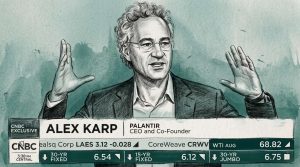
Alex Karp just told CNBC the AI industry is “effing insane.”
He’s right about one thing: AI isn’t overhyped, it’s mispriced. He’s also the guy selling you the fix....

Claude Fable 5: When Capability Meets Economics
Anthropic released Cloud Fable 5 with a paradox built in: safeguards sophisticated enough to let a mythosclass model...

Run Agentic AI Entirely on Your Mac—No Cloud, No Latency, No Privacy Tradeoffs
Apple’s MLX framework is mature enough now that you can run serious agentic AI workflows locally on Silicon...