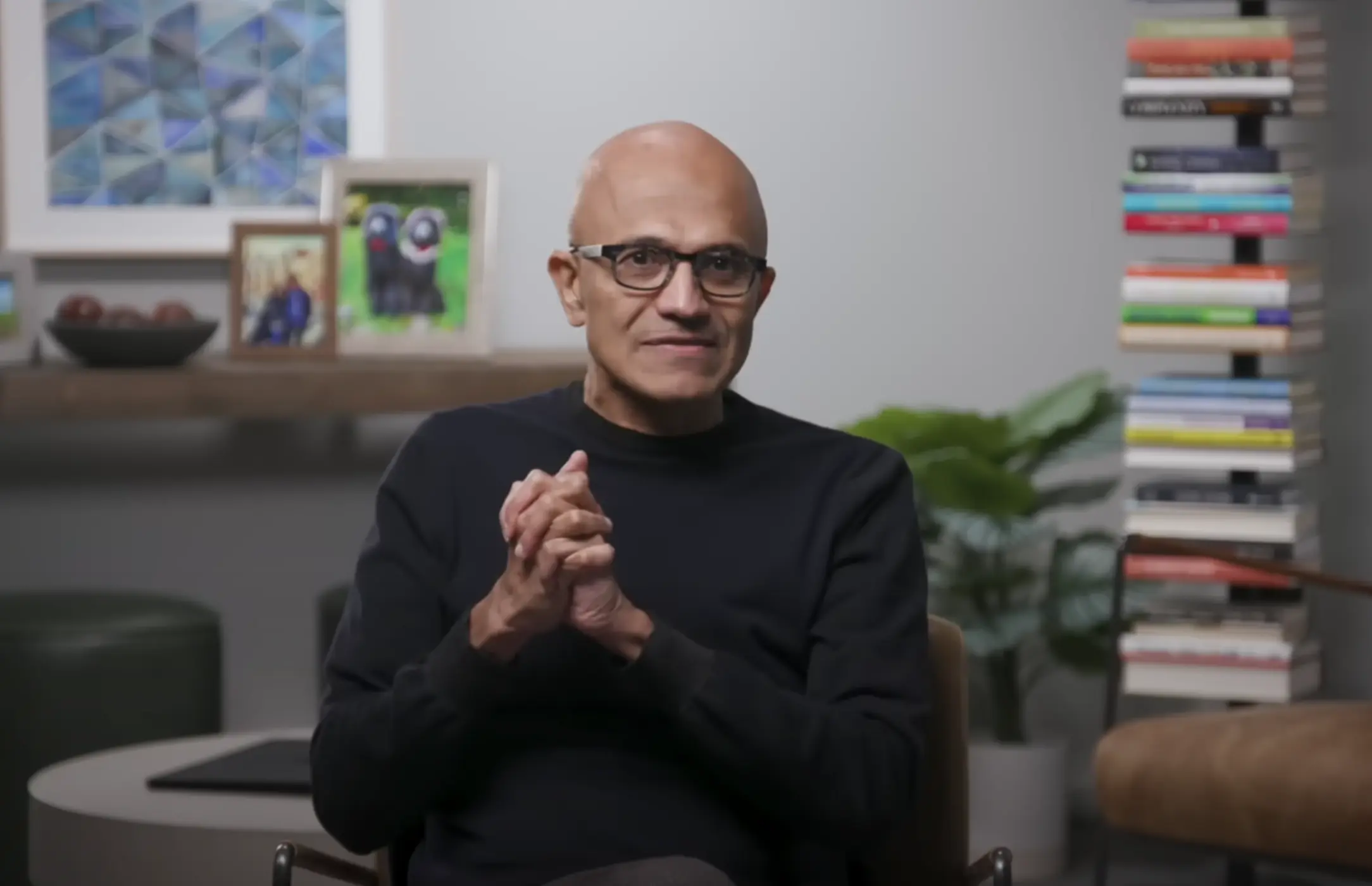
Imagine a world where your computer remembers everything you’ve ever done, thinks about what you might need next, and quietly gets it done before you ask. This isn’t science fiction – it’s the future Satya Nadella is betting Microsoft’s entire fortune on. And if you think ChatGPT is impressive, Nadella would tell you we’re still in the Stone Age of artificial intelligence.
The Microsoft CEO sees a future that would make Philip K. Dick’s head spin: AI agents with infinite memory, roaming through digital landscapes, negotiating with other AI agents on your behalf. These aren’t just chat interfaces that answer your questions; they’re digital ghosts that remember your preferences, understand your habits, and carry out complex tasks while you sleep.
“It’s about persistent memory,” Nadella explains, in his characteristically measured tone that somehow makes the revolutionary sound inevitable. Inside Microsoft, teams are already working on what they call “schematizing” memory – teaching AI systems not just to remember, but to understand the context and importance of those memories. Imagine an AI that doesn’t just recall your last conversation but understands how it fits into the tapestry of your entire digital life.
But Nadella’s vision goes beyond personal AI assistants. He sees a fundamental transformation in how knowledge work gets done. Think of it as “lean manufacturing” principles applied to intellectual labor. Just as Toyota revolutionized car manufacturing by eliminating waste and optimizing processes, AI will strip away the inefficiencies in how we think, write, and create. The waste in knowledge work isn’t physical – it’s the time spent recreating solutions that already exist, the mental energy expended on tasks that could be automated, the opportunities lost to human limitations.
This isn’t just philosophical musing. Microsoft is already building the infrastructure for this AI-powered future, and the numbers are staggering. The company is pouring billions into AI infrastructure, treating their capital expenditure more like an industrial company than a software firm. They’re building massive data centers filled with specialized AI chips, creating the neural highways these AI agents will travel on.
But here’s where Nadella’s vision gets really interesting: he sees a future where AI agents don’t just interact with humans – they interact with each other. Microsoft is developing connectors and licensing frameworks that will allow AI agents to negotiate and transact on their own. Imagine your AI agent finding the best price for a service, negotiating the terms, and handling the transaction, all while you’re focused on more important things.
The economics of this new world will be fascinating. The traditional value exchange model of the internet – where everything is driven by advertising and traffic – may become obsolete. In an agent-centric world, value will flow differently. Your AI agent might subscribe to services on your behalf, negotiate rates based on usage, and handle micropayments in real-time.
Nadella believes this transformation will happen at the application layer – where AI meets actual human needs. It’s why Microsoft isn’t just focused on building bigger models (they’ll leave that to their partners at OpenAI). Instead, they’re obsessed with how AI will be integrated into every piece of software we use. The future isn’t just about having smarter AI; it’s about having AI that’s deeply woven into the fabric of our digital lives.
But perhaps the most profound aspect of Nadella’s vision is how he sees AI changing the nature of software itself. “Every AI application requires a database, a Kubernetes cluster, and a model on an AI accelerator,” he explains. The lines between infrastructure, platform, and application are blurring. In this new world, software isn’t just a set of instructions telling a computer what to do – it’s a living system that learns, adapts, and evolves.
There are challenges, of course. The economic realities of running these massive AI systems will eventually force a balance between capability and cost. Safety and regulation will need to evolve as AI agents become more autonomous. And the whole system will need to be built with safeguards that preserve human agency while unleashing the potential of artificial intelligence.
But sitting in his office at Microsoft’s Redmond campus, Nadella seems unfazed by these challenges. He’s playing a longer game. While others debate the ethics of AI or chase the latest chatbot breakthrough, he’s building the foundational infrastructure for a world where AI isn’t just a tool we use – it’s an environment we inhabit.
The future Nadella envisions isn’t one where AI replaces human intelligence. Instead, it’s one where AI amplifies human capability, eliminating the drudgery of knowledge work and freeing us to focus on what humans do best: create, innovate, and imagine. And if he’s right, the software industry as we know it today will seem as quaint as MS-DOS does to us now.
What’s most striking about Nadella’s vision isn’t its technical complexity – it’s its inevitability. The pieces are already in motion: the infrastructure is being built, the agents are learning to remember, and the frameworks for their interaction are taking shape. The future isn’t coming; it’s being compiled, one line of code at a time.
More like this
Palantir’s Alex Karp Just Called the AI Industry “Effing Insane” Here’s What He’s Really Selling You
Alex Karp Just Told You Not To Trust Your AI Vendor. He’s Also Selling You the Fix. Palantir’s...

Schools Chose AI Detection Over AI Fluency. Now Your Kid Is on Your Clock.
More than half of America’s K-12 teachers cannot tell you what their school’s policy on AI is. Not...

Which Job Gets Its 1000X Next
Somewhere out there is a developer shipping in a week what used to eat a team for a...