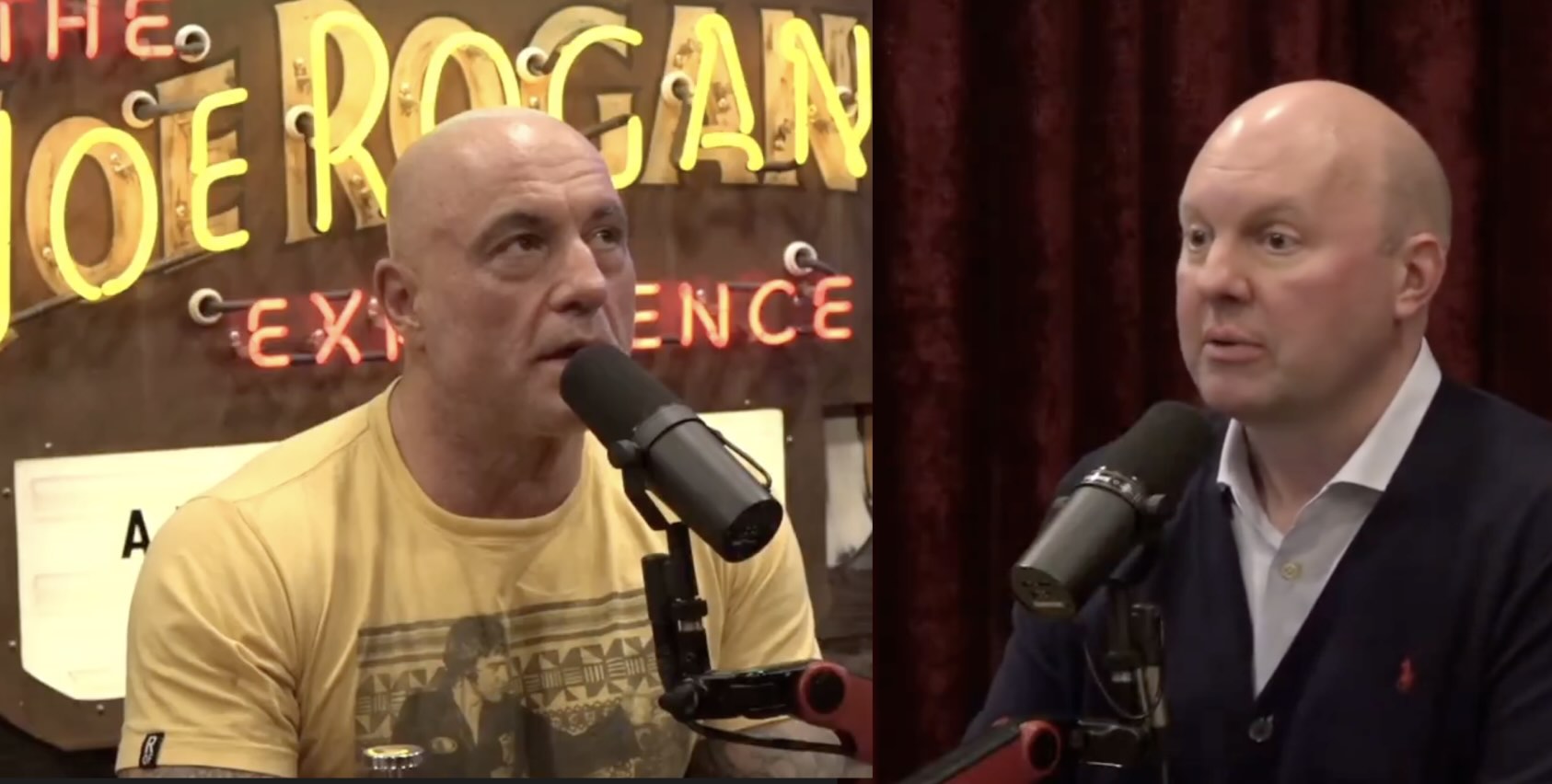
Breaking Down Marc Andreessen’s AI Warnings from Joe Rogan Experience Podcast

After listening to Marc Andreessen’s recent appearance on the Joe Rogan Experience, I felt like breaking down some of his most alarming revelations about government plans for AI control. As the founder of A16z (Andreessen Horowitz), one of Silicon Valley’s most influential venture capital firms, Marc’s insights carry significant weight. His warnings about the future of AI regulation and control deserve careful examination.
The Government’s Blueprint for AI Control
During the podcast, Marc revealed information about government meetings that took place this spring regarding AI regulation. The details are deeply troubling. According to the discussions, government officials made their intentions explicit: “The government made it clear there would only be a small number of large companies under their complete regulation and control.” This isn’t merely about oversight – it’s about establishing absolute control over AI development through a handful of corporate entities.
What makes this particularly concerning is the government’s hostile stance toward innovation and competition. Officials reportedly stated, “There’s no way they [startups] can succeed… We won’t permit that to happen.” This deliberate suppression of new entrants would effectively end the startup ecosystem that has driven technological progress for decades.
Most alarming was the finality of their position: “This is already decided. It will be two or three companies under our control, and that’s final. This matter is settled.” This suggests a complete bypass of democratic processes and public discourse on a technology that will reshape our society.
The AI Control Layer: A Deeper Threat to Society
But the true gravity of the situation becomes clear when Marc explains the broader implications. His warning is stark: “If you thought social media censorship was bad, this has the potential to be a thousand times worse.” To understand why, we need to grasp his crucial insight about AI becoming “the control layer on everything.”
This isn’t science fiction—it’s the likely progression of AI integration into our society. When this technology falls under the control of just a few government-regulated entities and companies, we face an unprecedented threat of social control.
Why This Matters
The implications of this centralized control are profound. Unlike social media censorship, which primarily affects communication, this would impact every aspect of daily life. Imagine a future where a small group of government-controlled AI systems decides:
Your children’s educational opportunities based on government-approved criteria Your access to financial services and housing Your ability to participate in various aspects of society
The AI models would be controlled to ensure their outputs align with approved guidelines
Marc’s revelation that “the Biden administration was explicitly on that path” suggests this isn’t a hypothetical concern – it’s an active strategy being implemented.

The Path Forward
Understanding these warnings isn’t about creating panic – it’s about recognizing the need for balanced, thoughtful approaches to AI development and regulation. We need oversight that ensures safety without stifling innovation. We need controls that protect society without creating mechanisms for unprecedented social control.
What makes Marc’s warnings particularly credible is his position in the technology industry. As a venture capitalist who has helped build some of the most successful tech companies, he understands both the potential and risks of AI technology. His concern isn’t about preventing necessary regulation – it’s about preventing the creation of a system that could fundamentally alter the relationship between citizens and government.
The solution isn’t to abandon AI development or regulation but to ensure it happens in a way that preserves innovation, competition, and individual liberty. This requires public awareness, engaged discourse, and a commitment to developing AI in a way that serves society rather than controls it.
As we process these revelations, the key question isn’t whether AI should be regulated, but how we can ensure its development benefits society while preserving the values of innovation, competition, and individual freedom that have driven technological progress. The stakes couldn’t be higher, and the time for public engagement on these issues is now.
More like this

Palantir’s Alex Karp Just Called the AI Industry “Effing Insane” Here’s What He’s Really Selling You
Alex Karp Just Told You Not To Trust Your AI Vendor. He’s Also Selling You the Fix. Palantir’s...

Schools Chose AI Detection Over AI Fluency. Now Your Kid Is on Your Clock.
More than half of America’s K-12 teachers cannot tell you what their school’s policy on AI is. Not...

Which Job Gets Its 1000X Next
Somewhere out there is a developer shipping in a week what used to eat a team for a...